

Manufacturers are often skeptical when choosing cryogenic valves. Sometimes they are concerned about the valve’s performance, durability, standards, or even safety. Unlike other industries and use cases, cryogenic environments have unique demands that must be met, otherwise, the risks can be very significant. Stainless steel cryogenic valves are preferred here since they are better at conducting cryogenic liquids and gases, and their corrosion resistance is top-notch, hence reducing these concerns, amongst other features.
However, all of these come with a caveat. If your valves were not made for cryogenic services, small failures can quickly become big problems. The global cryogenic valves market was valued at USD 3.63 billion in 2024 and is projected to reach USD 5.3 billion by 2030, driven by LNG and hydrogen projects. Hence, why you need the right cryogenic valves. To choose a stainless steel valve for liquefied gases or any cryogenic application, you have to get the valve type, design, materials, components, and standards right. Over here, we explained the different types of cryogenic valves, when and how to use them, stainless steel materials used in their production, and questions to ask before you buy.
Procamlock is a trusted OEM/private label manufacturer of all types of stainless steel cryogenic valves. Feel free to contact us to discuss the best one for your industry or enterprise.
What Are Cryogenic Valves & How Do They Work?
Cryogenic valves are a type of valve that controls the flow of fluids at extremely low temperatures (typically below -100°C or -148°F). They are used to store and transport large volumes of gases that have been cooled into a liquid state, like liquid nitrogen, methane, and oxygen. These valves make use of specialized designs and materials to prevent leaks, cracks, freezing, and industrial hazards that regular valves cannot handle. Knowing how gases like oxygen work, even tiny leaks can cause a fire outbreak, hence the need for caution.
Metals operate differently at low temperatures, and considering the very low temperatures required for cryogenic services, the materials used have to be able to withstand such temperatures. At very low temperatures, austenitic stainless steel remains tough, unlike carbon steel, which can become brittle. Also, the thermal expansion of metals in trapped volumes can be tricky, however, the valve design and austenitic stainless steel used here are adapted to these cryogenic liquids.
Types of Stainless Steel Cryogenic Service Valves
In industrial cryogenic systems (LNG, LOX, LH2, etc.), several cryogenic valve designs are used, each adapted with stainless steel materials and unique features for low‐temperature service. They include:
Stainless Steel Cryogenic Ball Valves

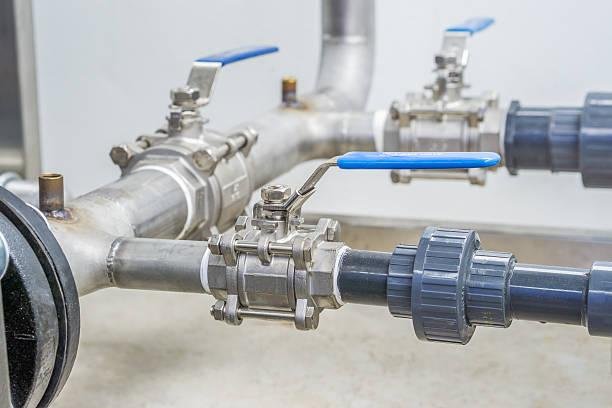
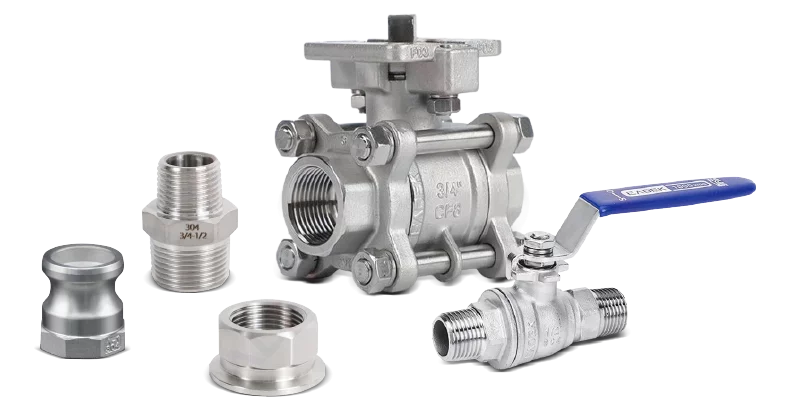
A cryogenic ball valve is a fast shutoff valve that is specially built to work at very low temperatures, which you find with liquefied gases (LNG, liquid oxygen, liquid nitrogen, liquid hydrogen). Inside the valve is a round ball with a hole through it. When the hole lines up with the pipe, fluid flows, and when the ball turns 90°, the hole is blocked, and flow stops. Most cryogenic ball valves are made from austenitic stainless steel (like 304L, 316L, or ASTM CF8/CF8M), and the valves have a stem that is kept away from the cold fluid with a long column. This way, the packing and seals are warmer and don’t freeze.
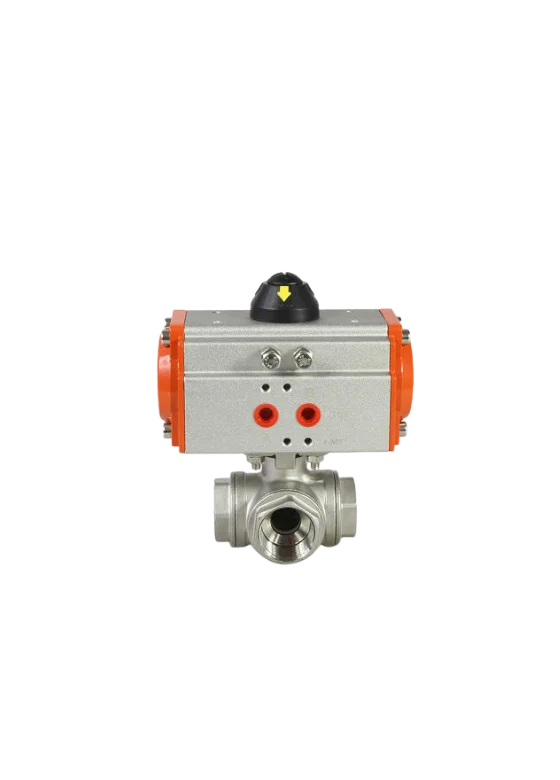
If liquid gets trapped around the ball and then warms up, the internal pressure can spike. Thankfully, stainless steel cryogenic ball valves often have small relief ports so trapped fluid can vent safely. The stem and seals are designed to be very strong so they don’t break or leak in low temperatures. Some 3-way cryogenic ball valves have pneumatic/electric actuators for remote shutoff, while others are manual.
Kuglehaner i rustfrit stål are used in cryogenic systems because they can quickly shut off the system with just a quarter-turn. They’re commonly used in tanker lines, truck offloading, and pipeline sections where you need reliable and quick isolation.
Stainless Steel Cryogenic Gate Valves

A stainless steel cryogenic gate valve is a heavy-duty shutoff valve that slides open straight through the pipe. The interior is like a gate that lifts up when opened and lowers when closed to block the flow of fluid across the pipe. This sliding action makes gate valves ideal when you want little flow restriction.
Cryogenic gate valves made from austenitic stainless steels are safe and reliable. Like other cryogenic valves, the bonnet keeps packing and seals away from the cold fluid so they don’t freeze. Some gate valves have relief holes, full-port (piggable) styles, dual-seat designs, or vented seats so any liquid trapped between the gate and seat can escape upstream, preventing dangerous pressure build-up. Stainless steel cryogenic gate valves provide very tight shutoff when closed and minimal pressure drop when open, so they are common at tank outlets and transfer manifolds. They are not usually used for rapid cycling.
Stainless Steel Cryogenic Globe Valves

A cryogenic globe valve is a linear, throttling valve used to safely control fluid flow at low temperatures. When the stem is turned, it presses a disc (plug) onto a seat to start, slow down, or stop flow. The plug (or disc) moves up and down to let more or less fluid through, and this throttling action makes globe valves good for flow control in smaller lines. Cryogenic globe valves use extended bonnets (like gate valves) to keep the stem seal area at higher temperatures. The seats are usually metal or special low-temp alloys for tight sealing. Unlike gate valves, globes introduce more pressure drop, but allow fine adjustment.
Stainless steel cryogenic globe valves are the go-to when you need to meter, regulate, or throttle cryogenic fluids. They manage boil-off gas rates, venting, and pressure in storage or process lines. Small globe valves give fine control to sensors and laboratory connections. And, they are used where controlled bleed or slow shutoff is safer than a sudden on/off.
Stainless Steel Cryogenic Check Valves

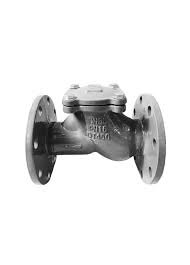
Stainless steel cryogenic check valves allow one-way flow to prevent backflow of cryogenic fluid. It opens automatically when the flow goes forward, then closes by gravity (or spring) when the flow stops or reverses. Cryogenic check valves are commonly made from fully welded stainless steel (304 SS) to prevent leaks, and installed vertically so gravity helps the disc close on reverse flow. The seats and seals are made from materials like PTFE, which are flexible at –196°C. These valves are rated for extreme conditions (e.g., some designs handle down to –452°F / –269 °C for helium service).
Common designs include swing-check, lift-check, and dual-plate check types. In practice, stainless cryogenic check valves protect piping systems (LNG, LH₂, He, Ar lines) against reverse flow or fluid hammer, thereby contributing to system safety and stability.
Stainless Steel Cryogenic Butterfly Valves

Butterfly valves use a rotating disc in the flow path to provide fast on/off control. Cryogenic butterfly valves are usually high-performance/offset designs (double‐ or triple‐offset) with metal or reinforced-graphite seats that give bubble-tight shutoff at low temperature. The valve disc and body are often made of 316 stainless steel. They typically have an extended neck or stem so that the actuator or handle stays above the cold zone (acting as a heat shield). These valves are lighter and shorter than gate or globe valves, and they require less torque for actuation.
Simply put, stainless steel cryogenic butterfly valves offer high flow capacity and relatively simple construction. They are lighter in weight, simpler to use, and cheaper than other valve types. Butterfly valves are ideal for large diameter pipelines (up to 24″ or more), such as LNG loading arms, tank inlet lines, or bulk transfer piping, where space is limited and high flow capacity is needed.
Stainless Steel Materials Used in Cryogenic Valve Applications
Austenitic stainless steel is often used in making cryogenic valves because it remains tough and ductile at very low temperatures. Austenitics (like 304, 304L, 316, 316L) have a face-centered cubic (FCC) structure that does not become compromised or brittle down to as low as –320 °F (–196 °C). They actually become more resistant to deformation at lower temperatures.
| 304 / 304L | 316 / 316L |
| Stainless steel 304 is the normal, cost-effective option, and 304L is the low-carbon version. | These are molybdenum-containing versions, for extra corrosion protection. |
| 304L is often used for welded parts in an attempt to avoid carbide precipitation in weld heat zones. | They are usually applied in LNG, marine, or contaminated gas service. |
In specialized cases (like liquid helium or highly corrosive streams), higher-Ni alloys (Inconel, Hastelloy, etc.) may be used. Alloys are typically specified per ASTM A351 (cast CF8/CF8M) or A743 (bimetallic disc) for cryogenic valves. Note that valves often list both the body and trim alloys.
Austenitics possess adequate ductility for cryogenic service; they “don’t just survive cryogenic service, they remain reliable”. But always ask for material test certificates (MTCs) so that you can check the exact grade and traceability before buying.
Components Of Stainless Steel Cryogenic Valves
Cryogenic stainless steel valves have a few key parts that keep them working in very cold environments.
- Extended bonnet (or long stem column) is one of the most important parts. All stainless steel cryogenic valves have a long stem extension or bonnet. It creates a large warm “gas column” above the valve cavity so that the stem packing stays out of the cold zone. This prevents the gland from freezing and stops ice buildup that could seize the valve.
- Cryogenic valve design codes (e.g., MSS SP-134 and BS 6364) mandate the extensions for service below –73 °C, and stems made as solid one-piece assemblies with no welds. This is because a solid stem is stronger and less likely to crack from thermal stress.
- Another safety feature is vented or relief cavities. If liquid gets trapped inside a cavity and then warms, it can vaporize quickly and spike pressure inside the valve. Small relief holes or self-relieving seat paths let that gas escape safely. These reliefs are often placed on the upstream side and are sometimes marked by a tiny “T” on the stem to show the vent path.
- Typical stem packing is PTFE or Grafoil. Valves for cryogenic applications often use outside-screw-and-yoke (OS&Y) stem designs so the moving parts remain accessible and protected.
Cryogenic Valve Applications
Cryogenic stainless steel valves are used in any industry that handles liquefied gases. These include:
- LNG handling, including trains, liquefaction units, marine terminals and trucks loading or unloading fuel. Plus tip: Global operational LNG liquefaction capacity reached 494.4 MTPA at the end of 2024, increasing demand for cryogenic piping and valves.
- In industries and hospitals, liquids like oxygen (LOX), nitrogen (LN₂), argon (LAR) and gases coming from air plants.
- Petrochemical sites running low‑temperature steps such as ethylene cracking or ammonia synthesis.
- Aerospace hydrogen projects that need liquefaction, tanks, trailers, fuel‑cell stations, onboard systems.
- Bulk storage & distribution using insulated pipes, loading arms, manifolds and ships loads of LNG, LOX or LH₂.
Stainless steel’s corrosion resistance and weldability make it ideal for these aggressive fluids. Whether the cryogen is flammable (H₂, CH₄), oxidizing (O₂), or inert (He), high-grade austenitic alloys provide the strength, leak-tight sealing, and low-temperature performance needed for modern cryogenic service.
Standards and Testing for Cryogenic Valves
Cryogenic valves must meet a short list of hard standards. These are the rules that prove a valve was designed, built, and tested for very low temperatures.
- BS 6364 and ISO 21011 cryogenic valve requirements: These standards define the design, materials, and low-temperature testing requirements for valves rated −40 °C and below.
- MSS SP-134 cryogenic valves: It specifies the body/bonnet extension and fabrication details, including extended bonnets, seamless tubes, and welding notes. It helps ensure the valve is up to size and built with safe bonnet columns.
- Cryogenic valve standards ASME 16.34: This is a general valve standard (materials, pressure-temperature ratings, marking) that also applies to cryogenic valves.
- API 598 cryogenic valve testing: A valve inspection and testing standard including shell tests and seat leak tests. Cryogenic valves are usually tested per API 598 (or ISO 5208) at room temp and often tested cold (BS 6364 cold-testing is optional).
- Leakage and emissions: ISO 15848-1 covers stem-seal performance for low emissions. Many cryogenic valve makers use API 624 or ISO 15848 packing for tight, low-leakage service.
- Pressure equipment directive (PED 2014/68/EU): For valves sold in Europe, pressure-equipment directives and national rules (e.g., CE marking) apply.
Bonus Tip: You should insist on documented proof for any of these tests or standards.
Konklusion
Cryogenic valves often have venting, cavity relief, or extended bonnets to accommodate trapped volumes and operate at very low temperatures. Knowing how gases like oxygen work, even tiny leaks can cause a fire outbreak. Hence, every detail of a stainless steel cryogenic valve needs extra attention to prevent industrial hazards. Don’t buy on the label “cryogenic” alone. Ask for material test certificates (MTCs), documented cryogenic tests, and clear temperature-to-pressure tables. If you need a single source for cryogenic stainless steel valves and support, check out Procamlock’s stainless steel cryogenic valve product line. Follow the details in this article, and you’ll be far more likely to get valves that perform safely and reliably in cryogenic service.
Ofte stillede spørgsmål
What makes stainless steel suitable for cryogenic valves?
Austenitic stainless steels, such as 304/304L and 316/316L, are resistant to cracking at very low temperatures, they don’t corrode much, are easy to weld and still retain their tensile strength as the temperature drops. All of which is just what you need for handling liquid gases.
What is the difference between a cryogenic ball valve and a globe valve?
A ball valve is a quick, quarter-turn shutoff valve with very tight sealing, great for isolation. A globe valve is a linear valve used to throttle or control flow. Both need cryogenic valve features (extended bonnets, one-piece stems, special seats), but ball is better for fast shutoff and globe for precise control.
What industry standards apply to cryogenic stainless steel valves?
Well-known industry standards that apply to cryogenic stainless steel valves are BS 6364 and ISO 21011 for their design and testing, MSS SP-134 for the bonnet and extension fabrication, ASME B16.34 and API 598 for pressure ratings and testing, ISO 15848-1 for fugitive emissions, and PED/CE if you’re working in the EU.
What valves are used in cryogenic service?
Common valve types used in cryogenic applications are ball, gate, globe, check, butterfly, relief/safety valves, vacuum-jacketed valves, control/regulating valves, and specialty instrument valves.
What stainless steel is used for cryogenic service?
304/304L and 316/316L are the stainless steel types mostly used for cryogenic services. 304L is preferred for welded parts to avoid carbide issues while 316/316L contains molybdenum for better resistance in salty or oxygen-rich environments. Both remain tough at liquid-nitrogen and liquid-hydrogen temperatures.






 Danish
  English
  German
  Spanish
  Japanese
  Korean
  French
  Polish
  Portuguese (Brazil)
  Russian
  Swedish
  Norwegian
  Finnish
  Thai
Thai  Vietnamese
  Chinese
  German (Austria)
  Portuguese (Portugal)
  Arabic