

Hydraulic valves are often treated as individual components selected late in the design process. In industrial environments, however, this approach frequently leads to unstable performance, excessive energy consumption, and unexpected downtime.
In reality, hydraulic valves are system-level decision points that directly affect productivity, reliability, and total operating cost.
This guide explains hydraulic valves from an industrial B2B perspective, helping engineers and decision-makers understand how valves function within hydraulic systems, how to select them correctly, and how poor valve decisions impact long-term operations.
Why Hydraulic Valves Determine System Performance, Cost, and Downtime in Industrial Operations
In industrial settings, unplanned downtime is rarely caused by a single catastrophic failure. More often, it results from gradual performance degradation—overheating, pressure instability, or inconsistent motion. In many cases, hydraulic valves are the root cause.
Hydraulic valves control how energy is distributed, limited, and redirected throughout a hydraulic system. When valves are mismatched to the application, the consequences include:
- Increased energy losses and heat generation
- Reduced machine precision and repeatability
- Accelerated wear of pumps, seals, and actuators
- Higher maintenance frequency and spare-part consumption
For OEMs and industrial operators, valve selection is therefore not only a technical choice, but also a business decision affecting lifecycle cost and operational reliability.
What Are Hydraulic Valves? — An Industrial Perspective
At a basic level, hydraulic valves regulate pressure, flow, and direction of hydraulic fluid. From an industrial perspective, this definition is incomplete.
In real applications, hydraulic valves function as:
- Energy management devices, controlling how power is transmitted and dissipated
- Safety boundaries, preventing overload and system damage
- Control logic elements, determining motion sequencing and responsiveness
Unlike laboratory or educational examples, industrial hydraulic systems operate under variable loads, contamination risks, temperature fluctuations, and continuous duty cycles. Hydraulic valves must perform reliably under these conditions while maintaining predictable behavior over time.
How Hydraulic Valves Function Within Industrial Hydraulic Systems
A hydraulic system should be evaluated as an integrated loop: pump, valves, actuators, fluid, and controls. Hydraulic valves sit at the center of this loop.
In industrial hydraulic systems, valves influence:
- Pump efficiency by determining pressure demand and flow paths
- Actuator behavior by controlling speed, force, and motion stability
- Thermal balance through throttling losses and internal leakage
- System cleanliness by defining contamination sensitivity and filtration requirements
Selecting a valve based solely on nominal pressure and flow ratings ignores these interactions. In practice, improper valve selection often shifts inefficiencies elsewhere in the system, increasing energy consumption or shortening component life.
Types of Hydraulic Valves Used in Industrial Equipment
Rather than listing valve types by name alone, it is more useful to classify them by functional role within industrial machinery.
Pressure Control Valves — Managing Risk and Compliance
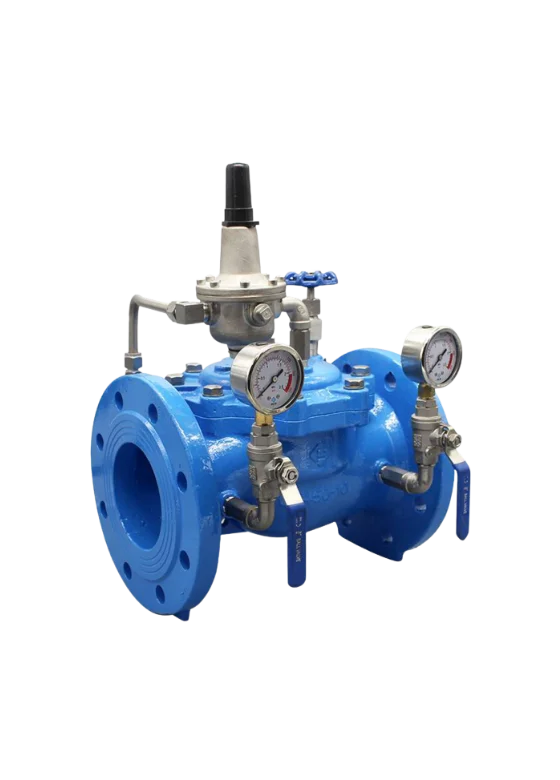
Pressure control valves define the maximum operating limits of a hydraulic system. Common examples include relief valves, pressure reducing valves, and sequence valves.
In industrial environments, these valves are critical for:
- Protecting mechanical structures and actuators
- Preventing overload conditions during transient events
- Supporting compliance with safety and machinery regulations
Incorrect pressure settings or unsuitable valve designs often lead to chronic overheating and reduced system efficiency rather than immediate failure.
Flow Control Valves — Balancing Productivity and Energy Efficiency
Flow control valves regulate actuator speed and motion smoothness. In industrial production equipment, speed stability is often as important as maximum throughput.
Key considerations include:
- Throttling losses and their effect on energy consumption
- Load-induced speed variations
- Interaction with pressure-compensated circuits
Poor flow control strategies can result in inconsistent cycle times, reduced product quality, and excessive heat generation.
Directional Control Valves — Enabling Reliable Machine Logic
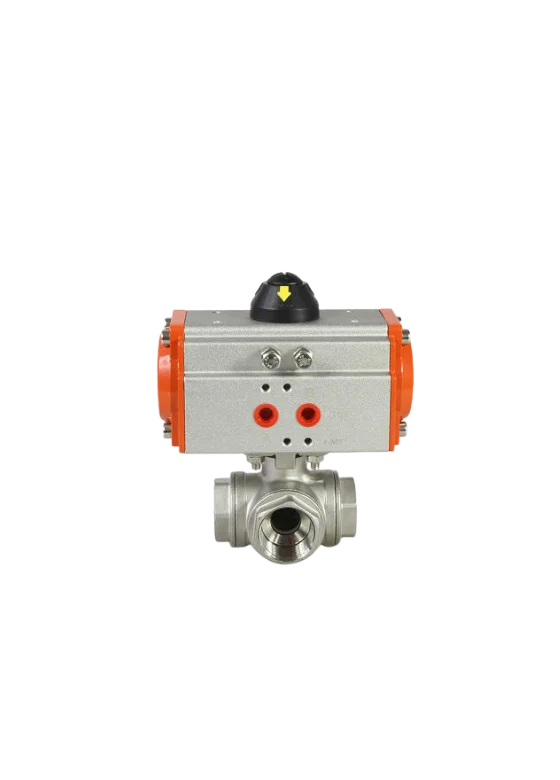
Directional control valves determine the sequence and logic of machine motion. They are essential for repeatable and predictable operation.
In industrial systems, directional valve selection affects:
- Automation level and control precision
- Response time and switching reliability
- Integration with electrical and electronic controls
As machine complexity increases, directional valves become a key interface between mechanical power and control logic.
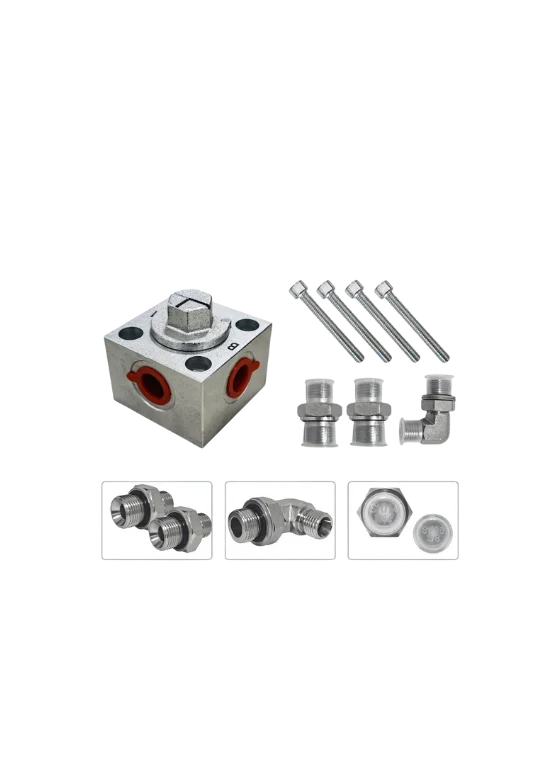
How to Select Hydraulic Valves for B2B Industrial Applications
Valve selection in industrial contexts should be based on application requirements rather than catalog optimization.
Key Technical Criteria Engineers Evaluate (Beyond Catalog Ratings)
Experienced engineers look beyond nominal specifications and evaluate factors such as:
- Actual operating pressure versus rated pressure
- Continuous versus intermittent duty cycles
- Internal leakage and its effect on holding accuracy
- Contamination tolerance and filtration strategy
- Response characteristics under varying loads
Ignoring these parameters often results in systems that technically function but perform poorly over time.
Operational Factors Procurement Teams Should Consider
From a procurement and operations perspective, hydraulic valve decisions influence long-term cost and supply stability. Important factors include:
- Total cost of ownership rather than unit price
- Spare-part availability and standardization
- Lead-time consistency across production cycles
- Compatibility with existing systems and maintenance practices
Aligning engineering requirements with procurement constraints is essential for sustainable industrial operations.
Common Industrial Hydraulic Valve Failures — and Their Root Causes
In many industrial environments, valve failures are symptoms rather than root causes. Common issues include:
- Excessive heat generation caused by throttling losses
- Unstable actuator motion due to flow mismatches
- Premature wear resulting from contamination sensitivity
- Noise and vibration linked to pressure instability
In most cases, these problems originate from inappropriate valve selection or system integration, not from manufacturing defects.
Application-Specific Considerations for Hydraulic Valves
Different industrial sectors impose distinct demands on hydraulic valves.
Manufacturing and Automation Equipment
These systems prioritize precision, repeatability, and integration with electronic controls. Valve consistency and response predictability are critical.
Construction and Heavy Machinery
Valves must withstand shock loads, contamination, and variable operating conditions while maintaining reliability in harsh environments.
Mobile Hydraulic Systems
Compact design, efficiency under partial load, and thermal management become key selection criteria due to space and power constraints.
Understanding these application-specific requirements prevents generic valve choices that compromise performance.
Industry Trends Affecting Hydraulic Valve Selection
Several trends are reshaping how hydraulic valves are specified in industrial systems:
- Increasing focus on energy efficiency and heat reduction
- Integration of electro-hydraulic and proportional control
- Greater emphasis on system-level optimization rather than component replacement
- Rising expectations for diagnostic capability and operational transparency
These trends reinforce the importance of viewing hydraulic valves as part of an integrated control strategy rather than standalone components.
Conclusion: Hydraulic Valves Are a Strategic Engineering Decision
In industrial applications, hydraulic valves influence far more than fluid direction or pressure limits. They shape system efficiency, reliability, safety, and operating cost over the entire equipment lifecycle.
Treating hydraulic valves as strategic system elements—rather than interchangeable components—allows OEMs and operators to reduce downtime, control energy consumption, and achieve consistent machine performance.






 English
  Danish
  German
  Spanish
  Japanese
  Korean
  French
  Polish
  Portuguese (Brazil)
  Russian
  Swedish
  Norwegian
  Finnish
  Thai
Thai  Vietnamese
  Chinese
  German (Austria)
  Portuguese (Portugal)
  Arabic